Where Athena Meets CGI: Reimagining the Classical with Valentina Ferrandes
Valentina Ferrandes
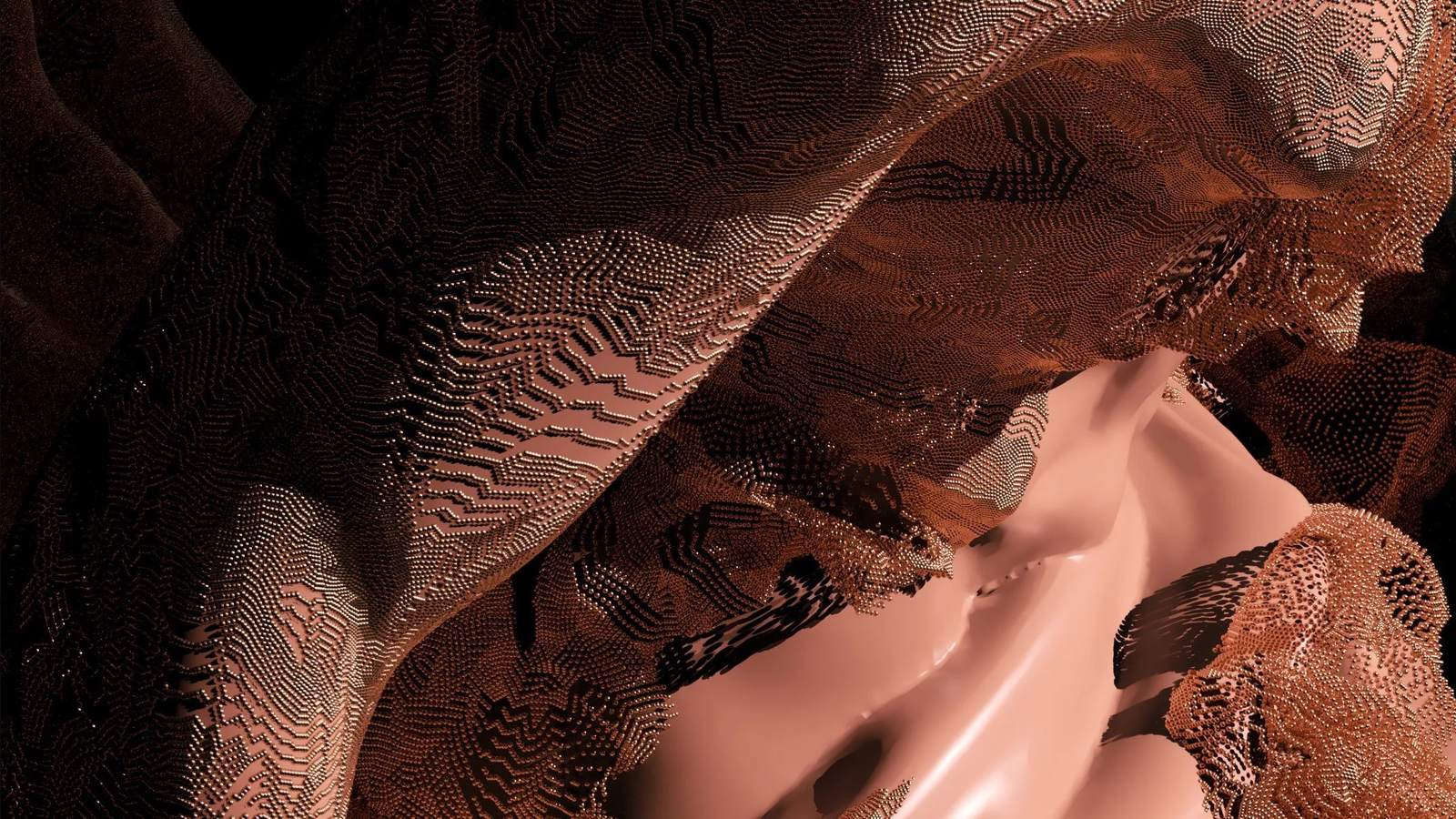
Valentina Ferrandes is a London-based visual artist and designer originally from southern Italy. Her work combines CGI, procedural animation, and narrative storytelling with archival and environmental materials. Drawing on classical iconography and archaeological references, she builds narratives that connect the past and present through immersive technologies. Her digital experiments often blur the boundaries between representation and abstraction, turning landscapes, objects, and recordings into dreamlike reimaginings shaped by code.
With training in both Fine Art and the Humanities, Ferrandes approaches her practice with depth and a strong focus on research. She was shortlisted for the Aesthetica Art Prize in 2023, received the Emerging Scene Arts Prize in Dubai, and has been recognized by the Japan Media Arts Festival. Her work has been exhibited internationally at venues including Visions du Réel, DokuFest, EMAP Osnabrück, and Rencontres Internationales. Currently completing her MA in 3D Environment Art at Escape Studios, she continues to explore the dynamic between ancient memory and digital transformation.
We spoke with Valentina about her art, creative process, and sources of inspiration.
AUREA
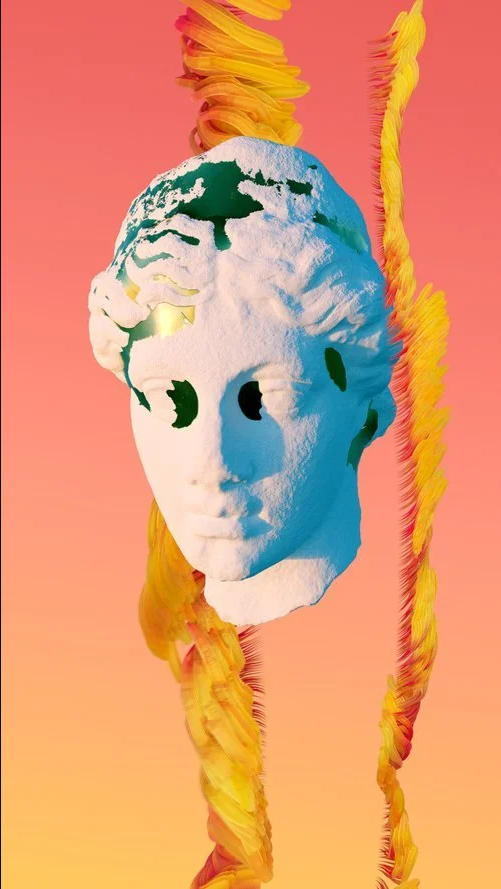
You’ve explored classical iconography through immersive technology — what draws you to these ancient symbols in such futuristic forms?
Classical iconography carries a powerful, timeless quality. Myths and their visual language provide a symbolic framework that still resonates across cultures and time periods. These symbols have stayed with me since childhood, and in my work, I revisit them not as static historical artifacts, but as living narratives open to reinvention.
Using digital tools — from 3D scanning to generative software and immersive installations — I reimagine these motifs in fluid, otherworldly ways. I’m especially interested in the tension between representation and abstraction. Much of my work starts with physical sources: landscapes, objects, field recordings. Yet when processed through code, the original subject often fades into something new. The result is a computational rethinking of the world — sometimes familiar, sometimes surreal and dreamlike. I’m captivated by that in-between space, where the ancient meets the unfamiliar logic of software.
BLOOM
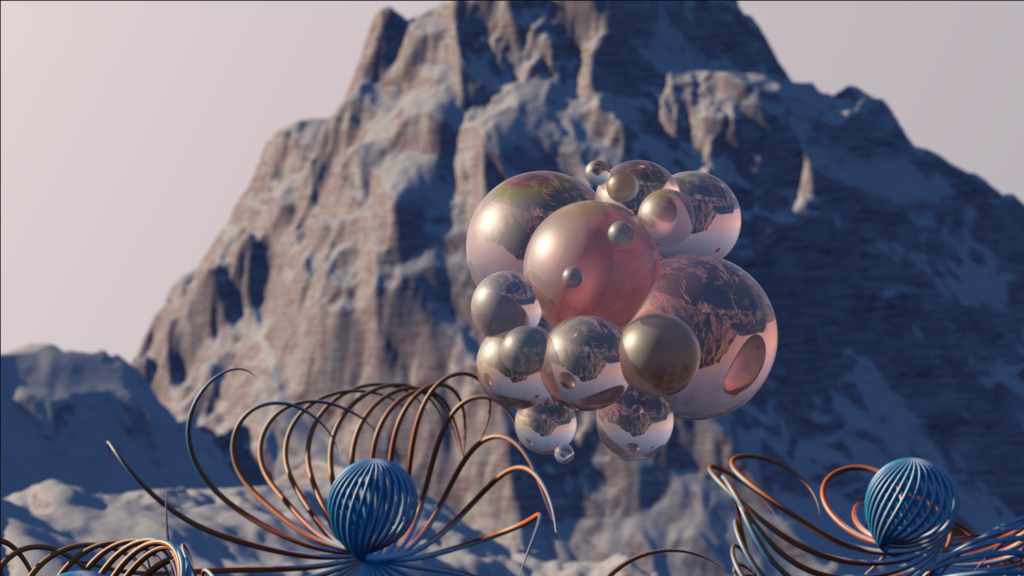
If you could create an immersive digital environment inspired by any archaeological site, where would it be and why?
More than a traditional archaeological site, I’m drawn to magical, charged places such as the Parco dei Mostri in Bomarzo or Villa d’Este in Italy. Their surreal Baroque gardens feature mysterious sculptures — gaping mouths, tilting buildings, mythical creatures half-covered in moss. They feel like landscapes suspended between dream and decay, where symbolism defies rationality.
I would love to reimagine these spaces as immersive digital environments — not as exact replicas, but as evocative, psychological landscapes. They are places where myth and memory intertwine, a kind of theater of the subconscious. To me, this is more powerful than any formal monument: a space that poetically resists logic and time.
DAAPHNE
Coming from southern Italy and now living in London, do you find your sense of place shaping your work in unexpected ways?
Absolutely. My roots inform the emotional tone of everything I create — the bright Mediterranean light of southern Italy, its landscapes, and my deep connection to classical forms and the artists who defined ideas of beauty. My early education in art history still shapes how I construct and compose images today.
Living in London, however, has completely transformed my approach to thinking and making. It’s a city defined by contrast and diversity, and being there sharpens your sense of self. You gain a clearer understanding of your own perspective, which adds greater depth and resonance to your work, both creatively and technologically.
In an environment filled with constant innovation, London teaches you to be intentional with the tools you use. You don’t just chase the latest technology for its own sake; you choose what serves your vision. Whether I’m working with 3D scanning, procedural software, or layering digital relics into new compositions, I always ask: What does this tool bring to the feeling, texture, and vision I want to create?
BLOOM
When I feel lost or disconnected, my work becomes my home. Creation becomes a space of belonging — grounded, timeless, and poetic. Technology allows this too: shaping the immaterial into living, immersive environments where distant ideas, memories, and emotions can coexist.
This contrast is evident in my work for Meta’s offices, part of the Open Arts Series. In Midday Muse, I envisioned two iconic forces merging — a modern tech company and the ancient goddess of strategy — brought together in a large-scale mural of Athena on the 13th floor of Meta’s London office.
When two seemingly opposing images are placed side by side or removed from their original context, they open up new interpretations. For Meta, the installation felt less like a typical office and more like a gallery space, even with its sharply modern aesthetic.
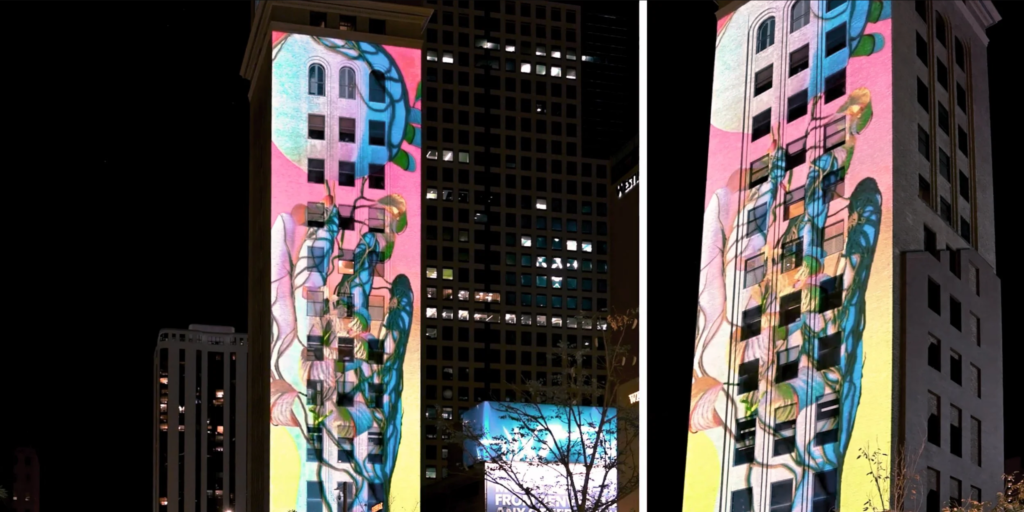
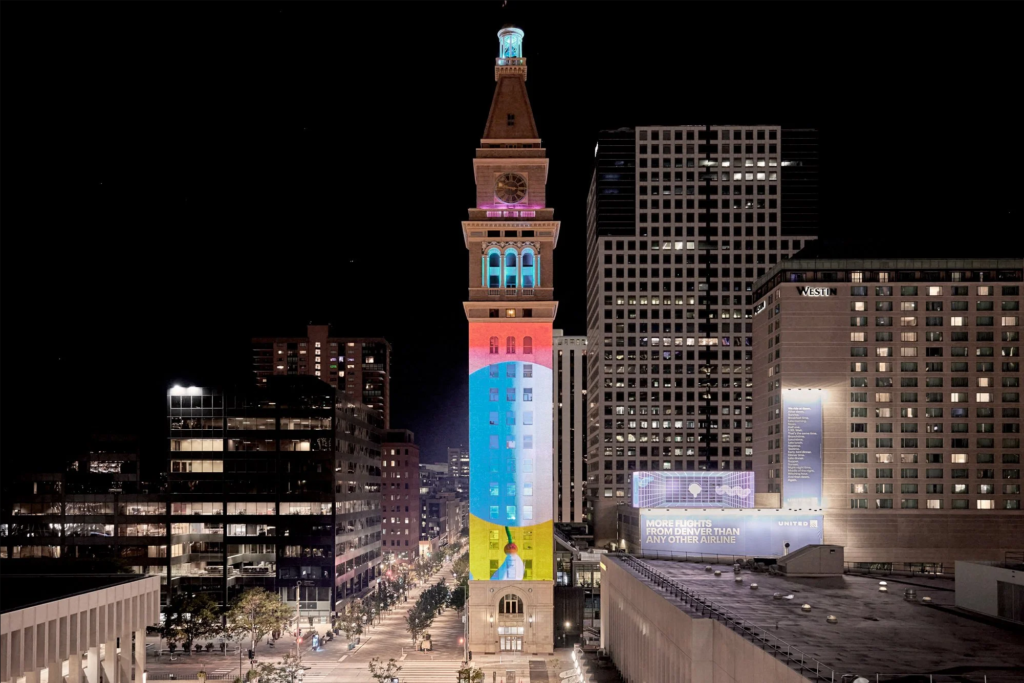
BLOOM also explores this idea of contrast. It was a video mapping commission for the Digerati Emerging Media Festival as part of Denver Night Lights. The tall building reminded me of the Campanile in Venice, which immediately set the direction. I juxtaposed abstract visuals with 3D scans of the Cleveland Apollo, blending them with natural forms. The sculpture felt perfectly at home on that towering public surface.
It was incredible to see these larger-than-life classical projections glowing against the Denver skyline, still holding such powerful presence.
BLOOM
What role does sound play in your process, especially when working with environmental recordings or archival footage?
Sound is essential — it often comes before the moving image. My earliest experimental films centered on atmospheric soundscapes: fragmented voices in multiple languages, snippets of dialogue from old films. Each listener brings their own associations; some recognize fragments, others connect with specific tones. It feels deeply personal and unique.
As my work has become more CGI-focused, I sometimes collaborate with musicians like Michele Di Martino, who turns archival material into layered, haunting textures and hypnotic polyphonies. I’m drawn to sounds that feel tactile — textured, raw, almost physical. When I deconstruct visual textures in a piece, I want the viewer not only to see it but to feel it.
Layering sound this way also suggests narratives beyond the frame. Recurring rhythms create space for ambiguity and emotional tension. There’s something organic about it; each listener latches onto different fragments, making the soundscape feel like a deeply individual experience.
In Daaphne, most of the voiceover is in English, but Russian voices occasionally break through — recordings of phone calls from mothers searching for their sons near the Ukrainian border. A child’s voice sings a Russian lullaby. I made the film at the start of the conflict, and that lullaby stayed with me. Though it remains subtle in the background, it acts as a quiet timestamp, collapsing layers of time within the story. Some viewers notice it; most experience it only subconsciously.
DAAPHNE
Your work beautifully bridges the past and present — what first inspired you to combine archival material with CGI and storytelling?
I grew up in a small town in southern Italy, built atop the ruins of an ancient Greek colony, near a grand temple dedicated to Demeter, the goddess of agriculture and fertility. My childhood was shaped by that landscape: rugged nature, sunlit ruins, and myths that felt almost alive. These stories weren’t distant legends — they were part of the land itself, a kind of everyday magic.
When I began making art, I naturally returned to these fragments. Archives and museums became spaces where I could study and engage with them. I’ve long been inspired by Ernesto De Martino’s writings on magic and ritual, and how myth shapes our understanding of reality, especially during uncertain times.
Earlier works like The Oyster Effect and Other Than Our Sea, which received a Jury Mention at the Japan Media Arts Festival, show how impactful archival narratives can be. At first, I was drawn to the raw power of ancient relics and their symbolic weight. Over time, I became more fascinated by the theatricality of the Baroque and the grace of classical aesthetics, approaching them in increasingly visual ways.
There’s great emotional depth in these layered styles — their contrast, balance, and ornate beauty. Using CGI and modern software, I reframe this imagery not as museum artifacts, but as speculative digital landscapes. My goal is to preserve their emotional power while reimagining how we experience them.
A clear example is Daaphne, where I reworked a passage from Ovid’s Metamorphoses using AI Dungeon, an AI writing tool designed for games. The Irish performer Margaret Kylcoine voiced a water nymph whose story was generated by a GPT model trained on narrative games. The way AI Dungeon described the nymph’s form became the foundation for the film’s visual style.
To me, technology opens new ways to reinterpret cultural heritage — approaches that feel surprising, emotional, and timeless.