Jeremy Oury: Shaping Perception in Digital & Immersive Art
Jeremy Oury is a French digital artist who explores the edges of reality and our relationship with the digital sphere through video, sound, and virtual environments. His work centers on crafting illusions via geometric distortion, synesthetic connections between sound and image, and immersive installations that place viewers at the center of a virtual universe, challenging how they experience space.
Oury’s pioneering work has earned international acclaim at video mapping and fulldome festivals, with presentations at leading digital art venues worldwide, including MUTEK MX, Mapping Festival, ISEA, FILE Festival, and others.
Beyond his artistic practice, Oury is an active curator and organizer, championing immersive art through projects like the Sous dôme Festival in Paris and the DomoArte touring program across Latin America.
We spoke with Jeremy about his art, creative process, and inspirations.
Can you tell us about your background as a digital artist? How did you get started in this field?
I’m a French digital artist working across sound and visual design to create distinctive digital works including architectural projection mapping, fulldome experiences, and original pieces for theater. I explore how we perceive reality and engage with the digital world through video, sound, and virtual space. My artistic focus is on creating illusions through geometric distortion, synesthetic relationships between sound and video, and immersive formats that place the viewer inside a virtual universe to shift their sense of space.
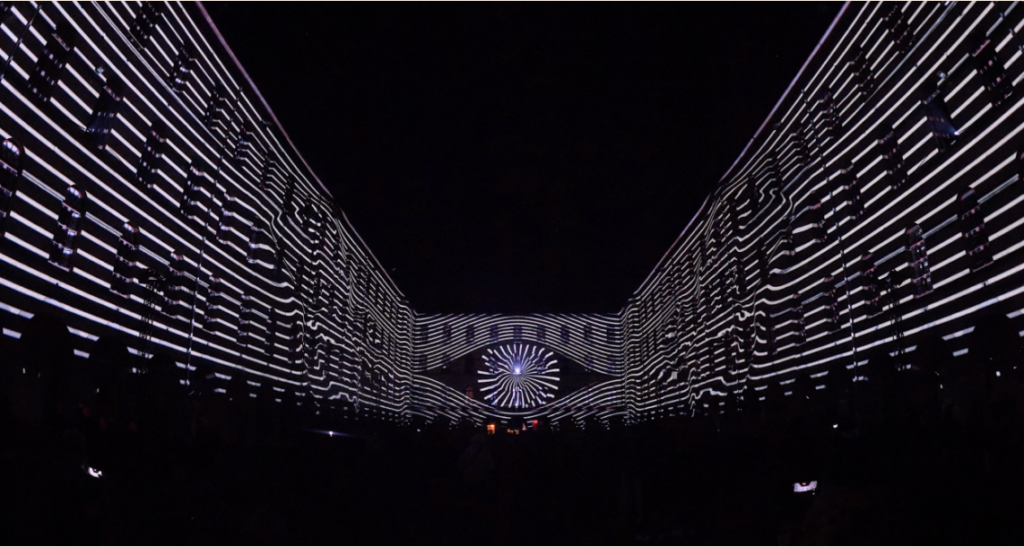
Since 2014, my work has been recognized and awarded at international video mapping and fulldome festivals, and exhibited at major digital art events worldwide, including MUTEK MX, Mapping Festival, ISEA, FILE Festival, and many others.
I began with VJing at student parties and later clubs in Lyon, France. I started projection mapping on buildings after entering the 1Minute Projection Mapping competition in Japan in 2014. The short time limit felt like a realistic way to begin this kind of work, and it was exciting to watch the stream and see my project chosen as one of 16 finalists.
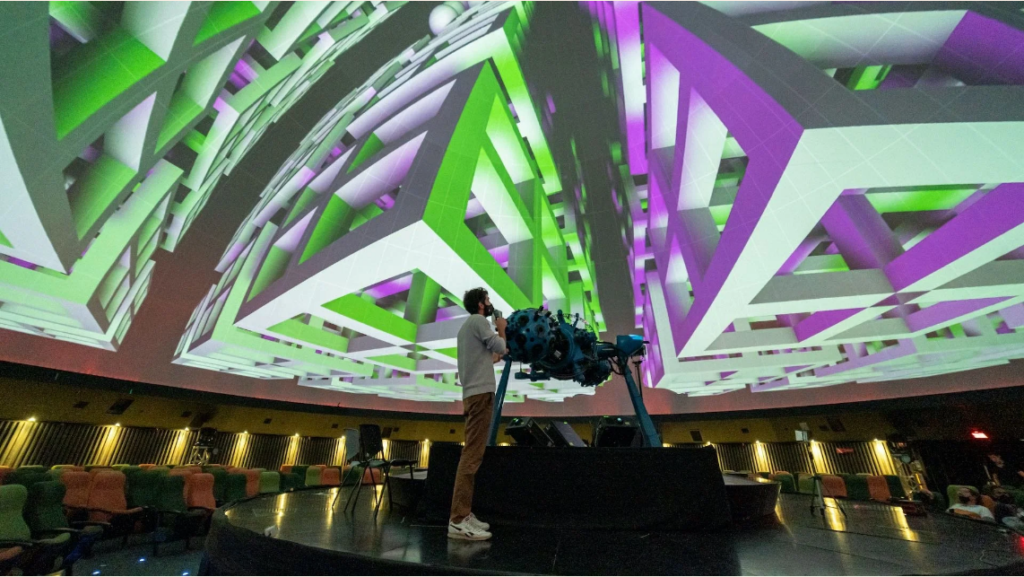
I continued this practice through other competitions and occasional collaborations with friends. As part of the ARCAAN Collective, we won the amateur category at FIMG festival in Spain, and I took home the amateur prize at FIMA in Mexico in 2015, which included an unforgettable trip there. My first major professional recognition came in 2017, when I won the jury prize at Spain’s Luz Y Vanguardias festival with my mapping work PRISM.
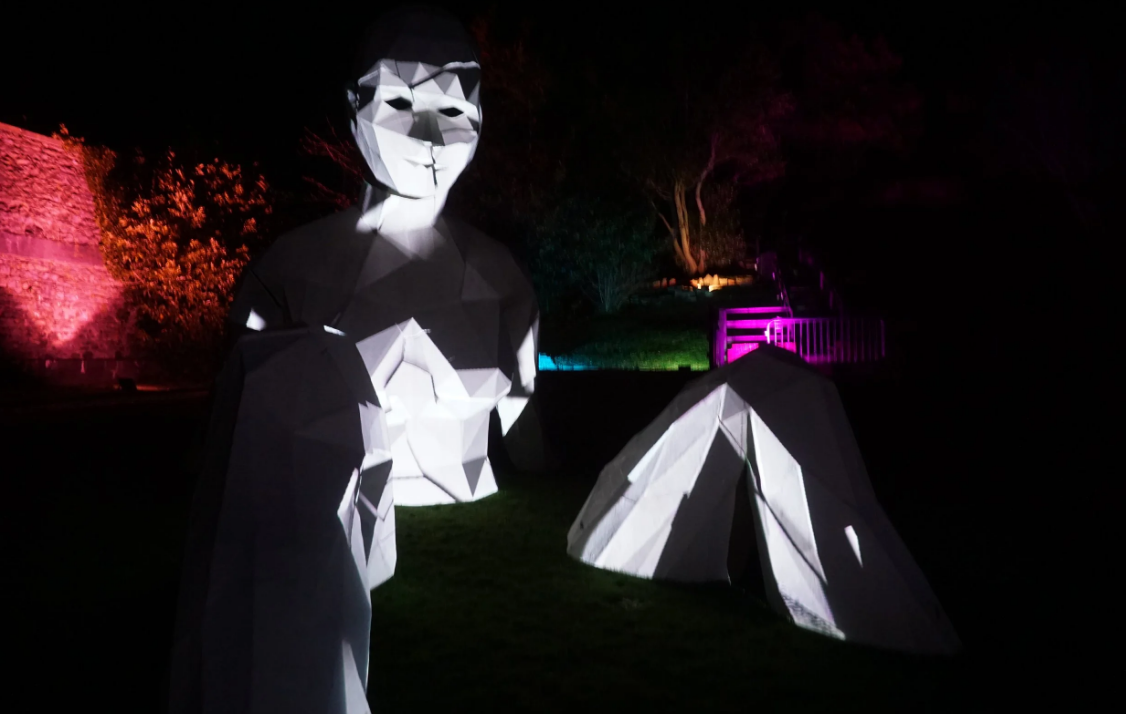
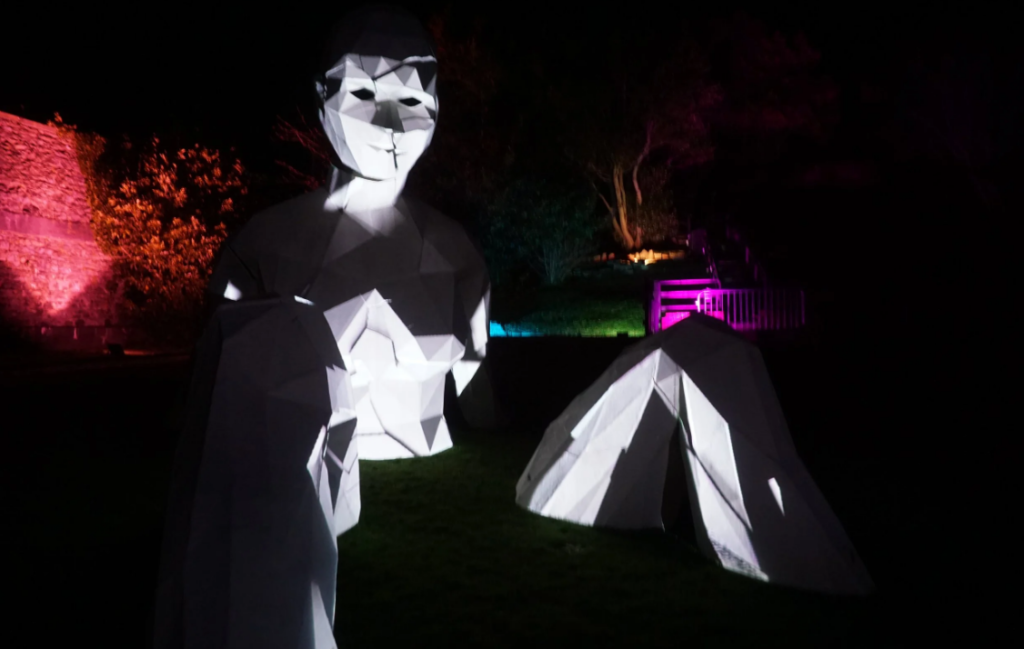
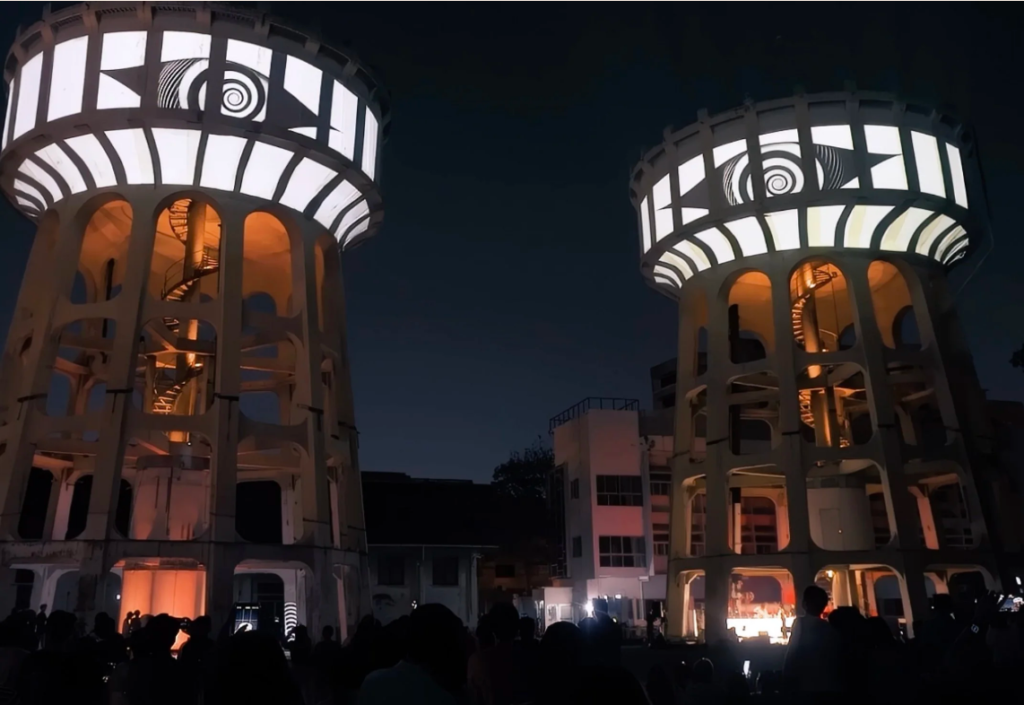
Through these connections, I joined large-scale light festivals, creating immersive 360° works, fulldome pieces for geodesic domes, and projections on giant sculptures like DIVA, a 4‑meter low-poly female figure by artist Thomas Voillaume. I still take part in international mapping competitions such as IMAPP, Zsolnay Light Art, and 1Min PM.
I’ve met countless artists and festival organizers along the way. That’s why I launched the Facebook page LIST OF INTERNATIONAL VIDEO MAPPING OPEN CALL & CONTEST, which now has nearly 5,000 members. I share opportunities and analyze competition results to support the community. A global ecosystem has grown around this practice, and many of us reconnect each year at festivals and professional gatherings like IBSIC in Lille.
Alongside my digital art projects, I collaborate with French theater companies on sound and video design, including productions such as Jeanne Dark by Marion Siéfert, Killing Robots by Linda Blanchet, Destin(s) by Jérôme Cochet, Je suis la bête by Julie Delille, Fracassés by Gabriel Dufay, and Mesure pour Mesure by Karim Bel Kacem.
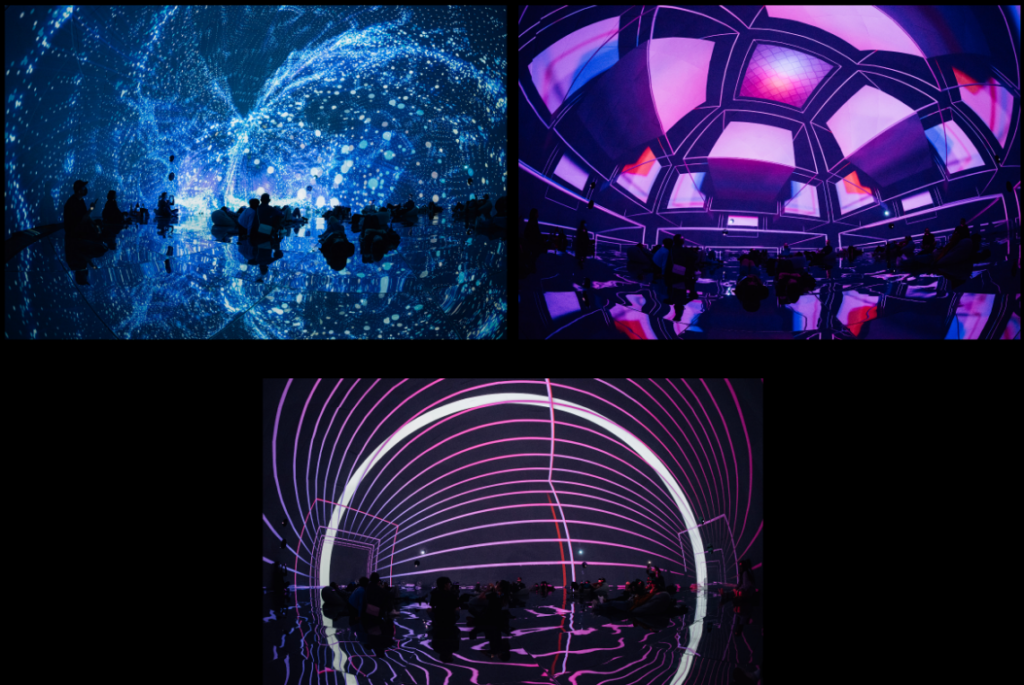
Most recently, I developed the 360° work Exo-Cortex, presented at venues including the Paris Planetarium, Kazakhstan National Museum, Foro Allende in Mexico City, and now Artechouse in New York.
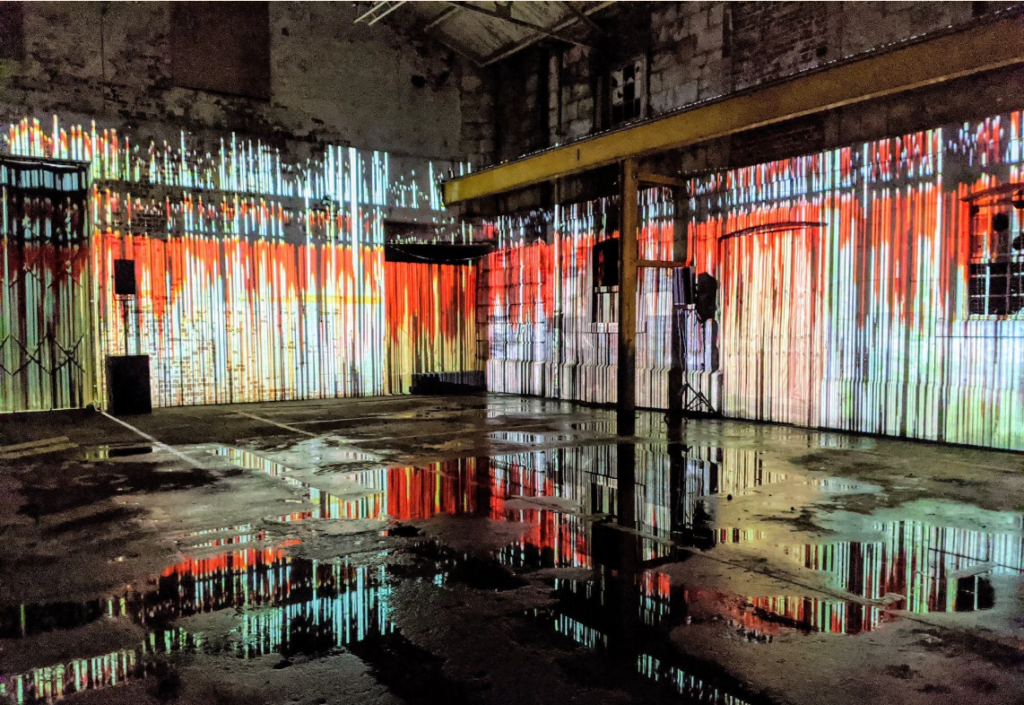
I also support immersive art by curating and organizing the Sous dôme Festival in Paris and the DomoArte touring project across Latin America, where I’m now based in Mexico City.
Your work often disrupts viewers’ perceptions of reality. What draws you to explore illusions and geometric distortions in your art?
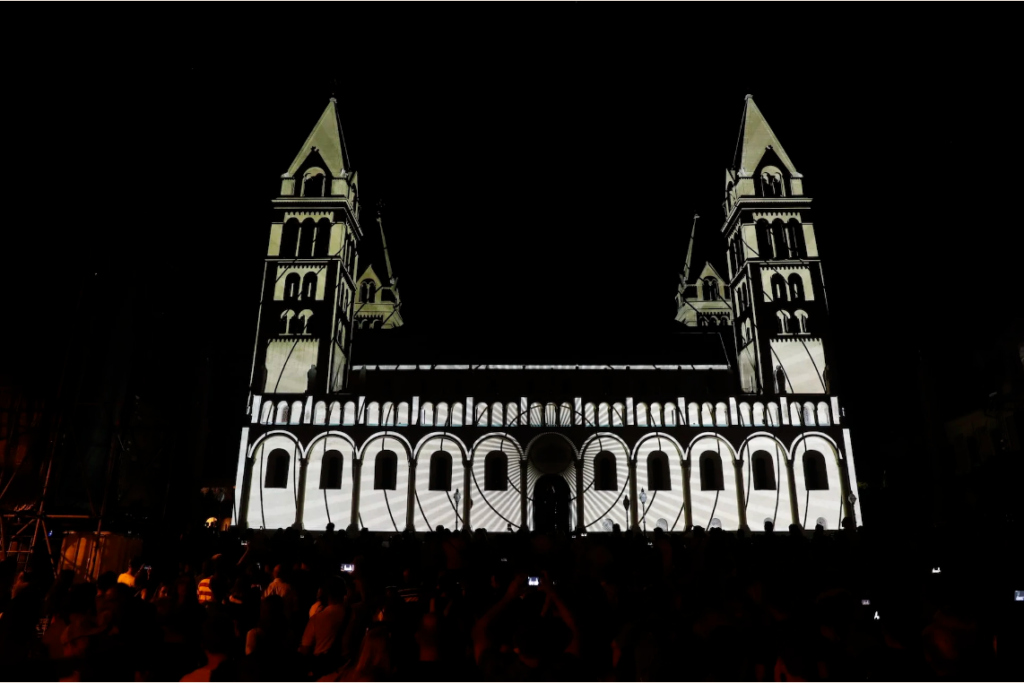
I was deeply inspired by the Fondation Vasarely in Aix-en-Provence, an architectural museum that is itself a work of art, filled with the artist’s monumental pieces. Vasarely’s optical art pioneered perspective distortions in painting that we now translate into architectural mapping.
More broadly, I’m a big fan of 1960s minimalist artists. With simple forms and clean lines, they create subtle visual unease that challenges how we see. Digital tools let us expand on the work of these early pioneers, adding a new layer of reality. I was also strongly influenced by the AntiVJ collective, which embraced early digital tools to create visually striking work.
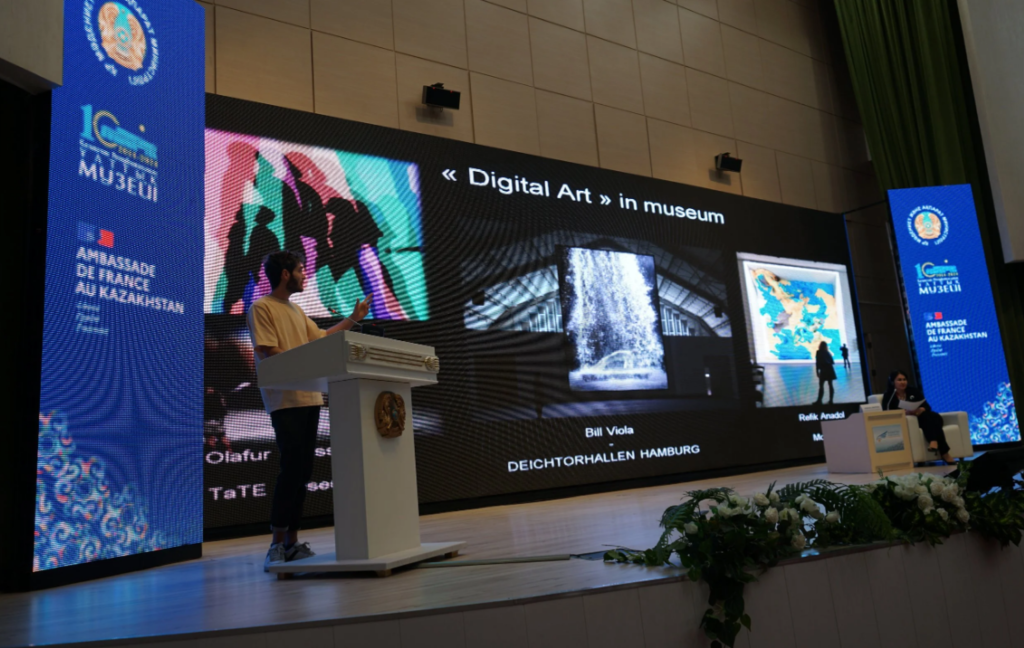
In immersive spaces like CAVEs, domes, or VR, we can sometimes “shift” reality so completely that viewers lose track of their physical surroundings. This works especially well in planetariums, where the hemispherical screen can seem to vanish. Achieving that effect requires careful control of balance and contrast among projected elements.
VR offers similar potential when paired with strong narrative and environment design. Works like Unlimited Corridor at FILE Festival 2018 or Outrospectre show how illusion can create vertigo and disorientation. Those rare moments of sensory disruption are exactly what I aim for in my art.
How do you approach the challenge of creating immersive experiences that engage not only visually but also emotionally and intellectually?
Immersion goes beyond surrounding the audience with 360° projections — it’s about building a connection between the work and the viewer.
Using voice-over, for example, creates a kind of dialogue and intimacy. Rhythm is equally essential. Visual animation is often built around the soundtrack, a key component many artists overlook. I also play with the spatial field to keep vision active rather than passive: shifting perspectives, bending horizons, and creating a visual game that unfolds throughout the piece.
In many ways, everything is decided in the first few seconds. If you can establish that initial connection, you draw the viewer fully into the work.
Do you have a specific piece where the interplay between sound and visuals surprised even you?
The first is Exo-Cortex, which features my wife’s voice in English, Spanish, and Portuguese. Spending so much time editing her voice during production became a very personal process. Layering a human voice over electronic sounds and digital visuals creates a powerful contrast that grounds the work in humanity.
The second is Next, made with AI tools including Stable Diffusion. I generated a jazz-inspired piece themed around the apocalypse. The vocals and lyrics are intense, yet the delivery feels gentle and innocent — a striking counterpoint to the chaotic imagery, where loud, destructive sounds might feel expected.
Something still felt missing, so I asked my father to improvise on trumpet. His soft, melancholic notes added a subtle, almost cinematic layer that complemented the visuals perfectly.
I also deeply admire artists like Ryoji Ikeda and the duo Nonotak, whose work lets sound generate visuals. At that point, it’s no longer just music — it becomes a material to be explored.
You’re based between France and Mexico. How do these different cultural environments influence your art?
There’s a real contrast between the two. France offers extensive resources: residencies, grants, festivals, and diverse opportunities to create. In Mexico, funding often requires more hustle, mostly from private sources. There’s a wild, almost anarchic energy, but it works because the artists here are incredibly talented — and supported by major events like MUTEK MX. The scene feels more alive and human, which I really value.
With DomoArte, we try to bridge these worlds by bringing European artists to Latin America and encouraging cross-cultural collaborations.
As a curator for Sous dôme in Paris and DomoArte in Mexico, what criteria do you use to select works that best represent the potential of fulldome art?
Curating looks easy from the outside, but festivals have taught me how demanding it really is.
The goal is to create balance for the audience: supporting women artists, arranging the program for strong rhythm, offering stylistic variety, and exploring meaningful themes. I also try to see the experience from the viewer’s perspective and anticipate their reactions. If people leave early, I often wonder if I should have reordered the program to open with something smoother or more energetic. Curating a festival is like composing a single work — it needs a cohesive rhythm.
There are still too few dome-specific works available, making it challenging to discover new content and styles. Much groundwork remains. We support new creation by inviting artists who work in immersive media but haven’t yet experimented in domes. It’s a risk — some pieces don’t fully land — but technical breakthroughs help push the entire field forward.
One key criterion is that works must be designed specifically for the dome format and engage its unique spatial qualities. They need narrative direction, not just random visuals, so the audience is truly transported into the artist’s world.