This Folkloric Wine Branding Highlights the Value of Handmade Illustration
Over the past year, I’ve said it time and again: AI-generated imagery isn’t the threat to handmade illustration that many fear. But sometimes, it’s easier to let a real-world example do the talking. And this one’s absolutely fantastic—Kingdom & Sparrow’s work for Welsh sparkling wine brand Mydflower.
The brief was straight out of a premium rebranding playbook: elevate a regional wine to compete in the sparkling market, and showcase its quality without losing the folkloric charm that makes it unique.
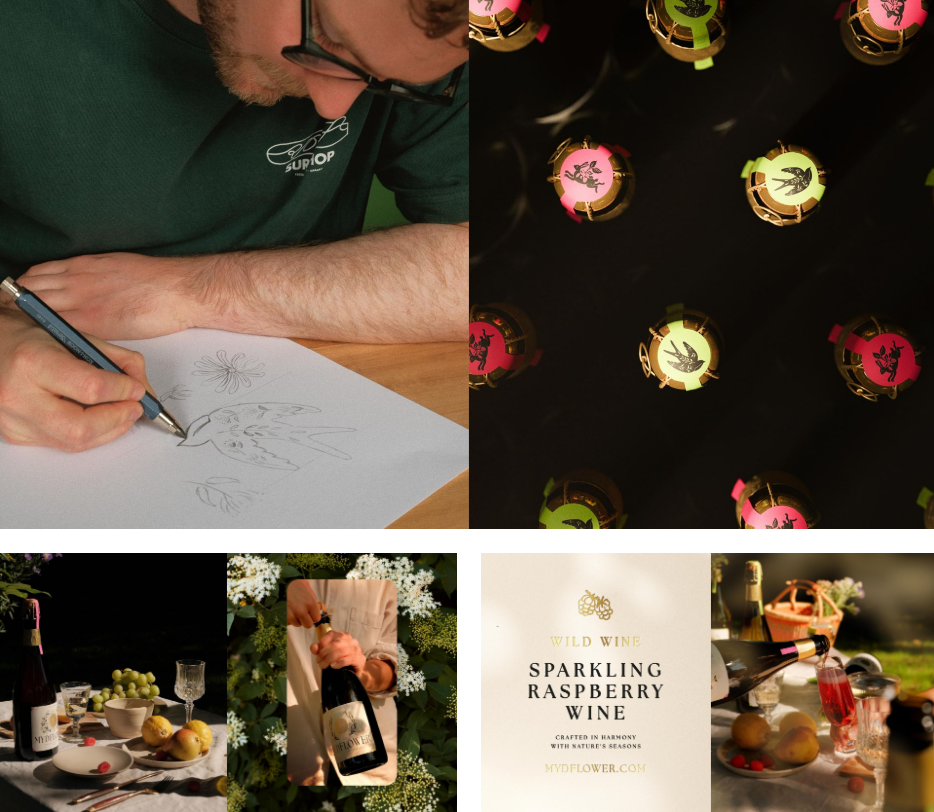
It’s the kind of project where some studios would fire up Midjourney, tweak a few prompts about “mystical Welsh countryside,” and call it a strategic win. Instead, Kingdom & Sparrow—a Falmouth, Cornwall-based agency—went old-school: lino-cut style illustrations of hares, birds, and wildflowers, the kind of painstaking, traditional technique that takes real skill and real time.
To me, that’s a no-brainer. Because in 2026, when you can generate a thousand versions of a “folkloric wine label” before lunch, choosing to create hand-drawn illustrations isn’t just an aesthetic call—it’s a positioning statement. And for Mydflower, it’s turning out to be the perfect one.
Craft Still Matters
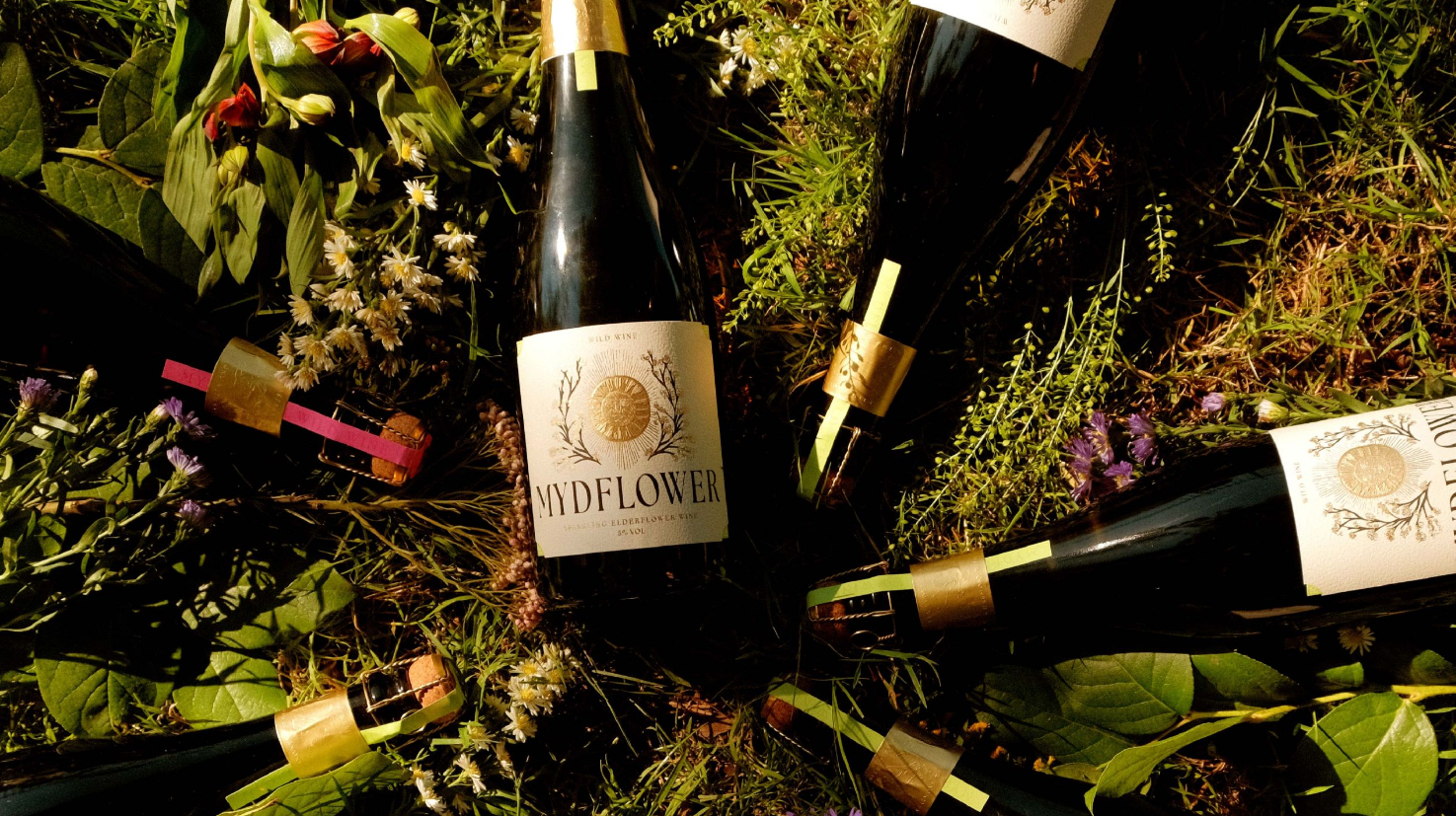
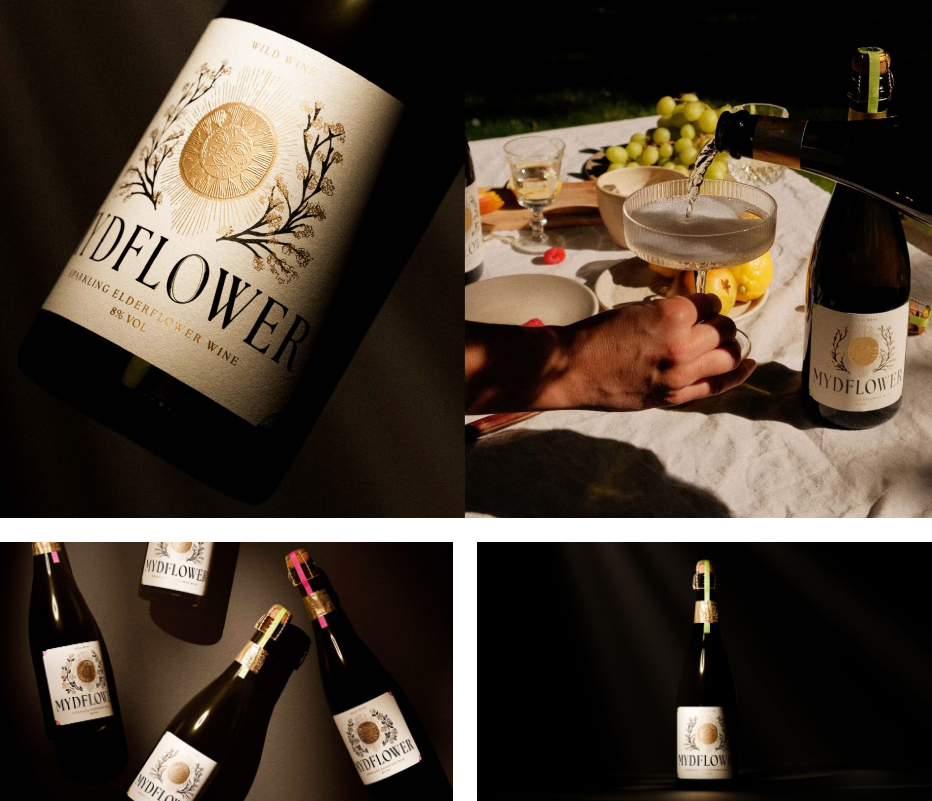
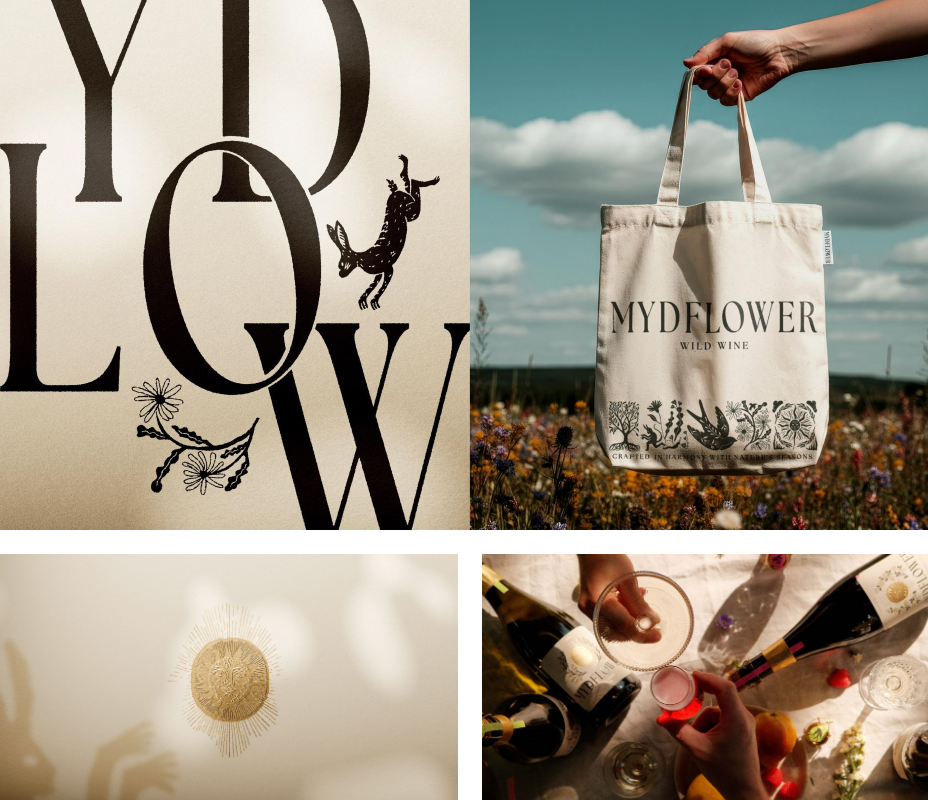
The technical execution here is a masterclass in why craft still counts in the high-end market. Those lino-cut illustrations aren’t just printed flat on the label; they’re embossed onto a custom neck cuff, with a golden sun embossed front and center on the bottle’s main label. The elderflower and raspberry variants each feature their respective botanicals framing that sun.
This is a design that gets the retail space: premium wines are bought just as much by touch as by sight. A hand reaches for a bottle, feels that tactile texture, and the brain instantly judges its value. That’s where the “AI can do anything” crowd usually goes silent. Sure, you can generate images. But can you art direct an emboss? Do you understand paper stocks, finishing techniques, and how light hits a debossed line? Kingdom & Sparrow clearly does, and it shows in work that only comes from understanding physical materials.
Folklore Meets Premium
The folklore angle is worth a closer look, too. Welsh mythology is hardly uncharted territory—it’s the kind of branding space that can easily veer into cheesy “themed restaurant” territory if you’re not careful. But the studio navigates it with impressive restraint.
The illustrations are intricate but not overdone, folkloric but not literal. Hares and wildflowers become elegant pattern elements instead of heavy-handed storytelling tools. The end result feels premium, not whimsical—and that’s exactly the balance Mydflower needed to strike.
From a strategic standpoint, what’s interesting is how the design solves a core brand conflict. Mydflower makes sparkling wine from elderflowers and raspberries, infused with Welsh mountain spring water and Champagne yeast. It’s trying to be both premium and alternative, traditional and distinct—all at the same time.
Impressively, the visual identity pulls off both. The craft-focused execution and embossing signal quality, justifying the premium price tag, while the folk illustration style and nature motifs set it apart from run-of-the-mill sparkling wines.
Key Takeaway
For creatives caught up in the AI debate, there’s a bigger lesson here. The question isn’t whether algorithmic tools can produce decent work (they absolutely can). It’s whether “decent” is where you want to position yourself—or your clients.
Kingdom & Sparrow is essentially selling the opposite of efficiency. They’re selling the visible proof of human time, skill, and decision-making. And crucially, they’re finding clients willing to pay for that.
This isn’t Luddism—it’s market positioning. In a category increasingly flooded with AI-generated content, hand-crafted work stands out not in spite of being slower and more expensive, but because of it. The economics of premium goods have always rewarded scarcity and visible craft. A design studio that can deliver both—and has a team trained in traditional image-making and typography—has a market position that’s hard to copy.
The Mydflower project also shines a light on something the design press often overlooks: the importance of regional creative ecosystems. Falmouth isn’t London, but its university churns out graduates with unique skills, and studios like Kingdom & Sparrow are building their practices around those strengths. Food, drink, and lifestyle brands are a perfect fit for this approach; they’re often on the hunt for authenticity and craft stories that align with their products.
Whether this model scales is another question. Hand-drawn illustration is inherently labor-intensive. But for studios working in the premium space, that’s the whole point. You’re not selling scalability—you’re selling something someone with a subscription and a good prompt can’t easily replicate.
That’s why I believe as creative automation becomes everywhere, the commercial value of demonstrable human craft will only grow. Kingdom & Sparrow’s branding for Mydflower makes it clear: some clients are actively seeking design that looks and feels handmade. The challenge for creatives is whether they have the skills to deliver it.